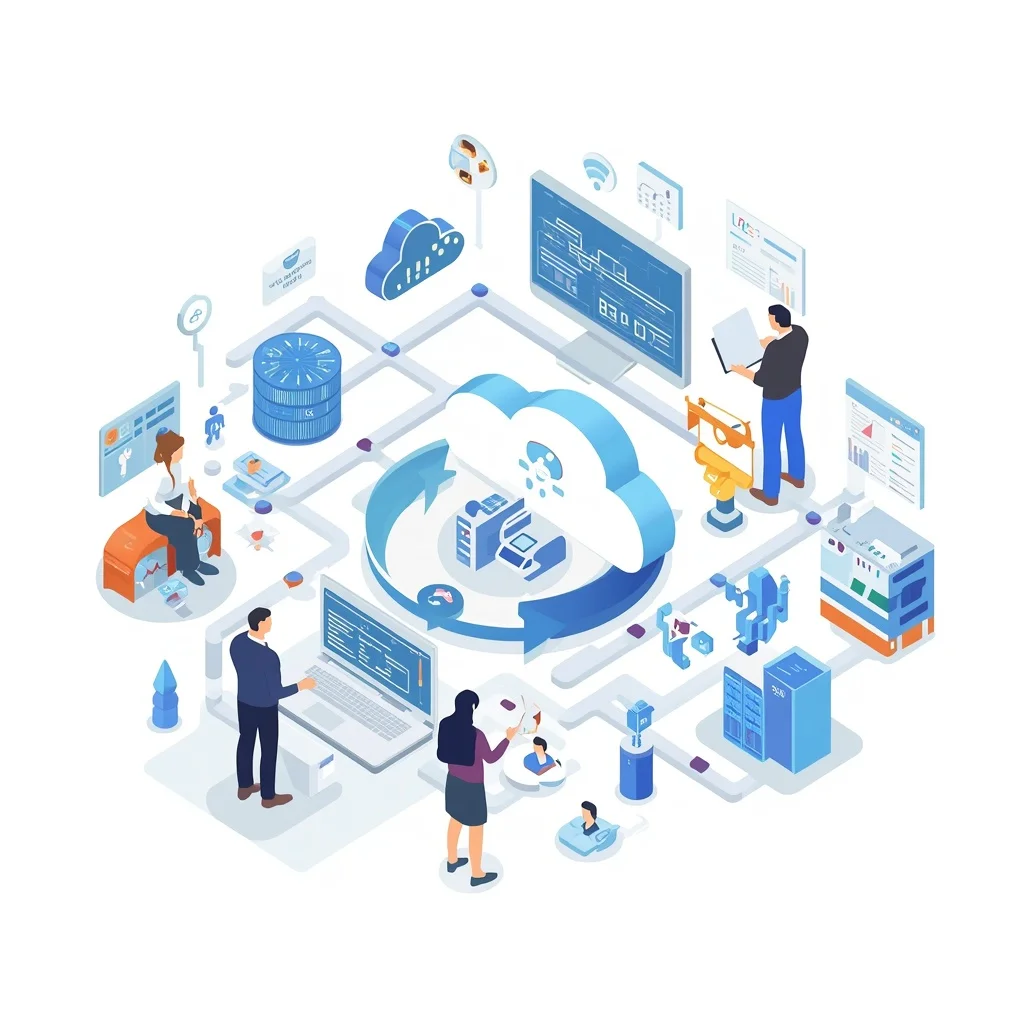
Modern software businesses need to deliver applications quickly while maintaining reliability, security, and performance. As development environments become more complex, organizations often need a better way to connect software development, IT operations, testing, security, and deployment.
This is where DevOps consulting services can help.
DevOps consulting focuses on improving the processes, tools, infrastructure, and practices used to build, test, deploy, and operate software. Rather than simply introducing another software tool, a DevOps consultant evaluates how an organization currently works and identifies opportunities to make software delivery more efficient and reliable.
For companies planning digital transformation, DevOps can also become an important part of the wider technology strategy. Our guide to AI and Digital Transformation provides additional context on how modern technologies can support broader business transformation.
What Is DevOps Consulting?
DevOps consulting is a professional service that helps businesses improve collaboration between software development and IT operations.
A DevOps consultant can assess an organization’s existing development and infrastructure environment, identify bottlenecks, and recommend practical improvements.
Typical areas covered by DevOps consulting include:
- Continuous integration and deployment
- Cloud infrastructure
- Infrastructure as code
- Containerization
- Automated testing
- Monitoring and observability
- Security
- Release management
- Development workflows
- Infrastructure optimization
- DevOps automation
The exact scope depends on the organization’s size, technology stack, existing infrastructure, and business objectives.
What Are DevOps Consulting Services?
DevOps consulting services can cover the complete software delivery lifecycle.
A consulting engagement may begin with an assessment of the current environment and continue through implementation, automation, monitoring, and team training.
Common services include:
DevOps Assessment
The first step is often an assessment of the company’s existing development and operations processes.
Consultants may examine:
- Source-code management
- Deployment processes
- Testing procedures
- Infrastructure
- Cloud usage
- Security practices
- Monitoring
- Team collaboration
- Release frequency
- Manual processes
The assessment helps identify where delays, unnecessary costs, reliability issues, or security risks may exist.
CI/CD Implementation
Continuous integration and continuous delivery or deployment are major components of DevOps.
Continuous integration allows developers to frequently integrate code changes into a shared repository where automated tests and validation can be performed.
Continuous delivery or deployment extends the process by preparing or automatically releasing validated changes into appropriate environments.
A CI/CD pipeline can automate steps such as:
Code commit → Build → Test → Security checks → Deployment → Monitoring
This reduces the amount of repetitive manual work involved in software releases.
Why Businesses Use DevOps Consulting
Organizations can have very different reasons for investing in DevOps.
Some businesses need to release software more frequently. Others may be dealing with unreliable deployments, inefficient infrastructure, growing cloud costs, or disconnected development and operations teams.
DevOps consulting can address several common business challenges.
Faster Software Delivery
Automated development and deployment workflows can reduce the amount of manual effort required to release applications.
Instead of performing the same deployment steps manually for every release, teams can create repeatable pipelines.
Improved Reliability
Standardized processes and automated testing can reduce the possibility of deployment mistakes.
Monitoring and observability can also help teams identify problems before they become larger operational incidents.
Better Collaboration
DevOps encourages development and operations teams to share responsibility for software delivery and reliability.
This can reduce communication gaps between teams that traditionally worked separately.
More Consistent Environments
Infrastructure automation can help organizations create more consistent development, testing, staging, and production environments.
This can reduce problems caused by differences between environments.
DevOps Consulting vs Traditional IT Consulting
Traditional IT consulting can cover a wide range of technology areas, including infrastructure, software systems, networking, and IT strategy.
DevOps consulting has a more specific focus on the software delivery lifecycle and the relationship between development and operations.
A DevOps consultant may concentrate on questions such as:
- How is code deployed?
- How much of the process is automated?
- How are infrastructure changes managed?
- How are applications monitored?
- How quickly can teams recover from failures?
- How are security checks integrated into development?
- How consistent are deployment environments?
The distinction is not absolute. Many modern IT consulting projects include DevOps practices as part of a broader technology strategy.
Core Components of DevOps Consulting
A successful DevOps approach normally involves multiple technical and organizational components.
1. Continuous Integration
Continuous integration allows developers to integrate changes regularly and automatically validate those changes.
Automated builds and tests can identify problems earlier in the development process.
2. Continuous Delivery
Continuous delivery keeps software in a releasable state through automated build, testing, and deployment processes.
This allows organizations to release changes when they are ready rather than depending entirely on large manual release cycles.
3. Infrastructure as Code
Infrastructure as Code, commonly known as IaC, allows infrastructure configurations to be managed through code and configuration files.
Instead of manually configuring every server or environment, organizations can define infrastructure in a repeatable format.
Benefits can include:
- Repeatability
- Version control
- Faster provisioning
- Easier environment management
- Reduced configuration errors
4. Containers
Containers package applications and their dependencies into standardized units that can run consistently across supported environments.
Container technologies can simplify application deployment and scaling.
DevOps consultants may help businesses determine whether containerization is appropriate for their applications and infrastructure.
5. Cloud DevOps
Cloud platforms provide infrastructure and services that can support modern DevOps workflows.
A DevOps consulting project may involve cloud environments for:
- Application hosting
- Databases
- Storage
- Networking
- CI/CD
- Monitoring
- Security
- Infrastructure automation
Cloud adoption does not automatically create a DevOps environment, however. Organizations still need appropriate processes, automation, governance, and monitoring.
DevSecOps: Integrating Security Into DevOps
Security should not be treated as something that happens only after software development is complete.
DevSecOps incorporates security practices into development and deployment workflows.
Security checks can be integrated into CI/CD pipelines to identify potential issues earlier.
DevSecOps practices may include:
- Dependency scanning
- Code analysis
- Container security
- Secrets management
- Vulnerability testing
- Access control
- Infrastructure security
- Security monitoring
The objective is to make security a continuous part of software delivery rather than a final checkpoint.
Monitoring and Observability
Deploying an application is only part of the DevOps process. Teams also need to understand what happens after deployment.
Monitoring provides visibility into system performance and availability.
Observability goes further by helping teams investigate why a system behaves in a particular way using available telemetry and operational data.
Important signals can include:
- Application logs
- Metrics
- Traces
- Error rates
- Response times
- Infrastructure performance
- Resource utilization
A DevOps consultant can help organizations establish monitoring and alerting systems that provide useful information without overwhelming teams with unnecessary notifications.
Automation in DevOps
Automation is one of the central ideas behind DevOps.
Manual processes can become difficult to maintain as organizations grow. Automation can make repetitive tasks more consistent and easier to scale.
Potential areas for automation include:
- Software builds
- Testing
- Deployments
- Infrastructure provisioning
- Security checks
- Backups
- Monitoring
- Environment creation
- Rollbacks
However, automation should be introduced strategically. Automating a poorly designed process can simply make a flawed process happen faster.
How a DevOps Consulting Project Works
A typical DevOps consulting engagement can involve several stages.
Stage 1: Discovery
The consultant learns about the organization’s applications, infrastructure, teams, development process, and business requirements.
Stage 2: Assessment
Existing tools and workflows are reviewed to identify bottlenecks and technical risks.
Stage 3: Strategy
A practical DevOps roadmap is created based on the organization’s priorities.
The roadmap may define:
- Recommended tools
- Automation opportunities
- Infrastructure changes
- Security improvements
- CI/CD architecture
- Monitoring requirements
- Implementation priorities
Stage 4: Implementation
Selected DevOps practices and technologies are introduced.
Depending on the project, this could include building CI/CD pipelines, automating infrastructure, introducing containers, or improving monitoring.
Stage 5: Testing
The new workflows are tested to verify that deployments, automation, security controls, and monitoring work as expected.
Stage 6: Training and Documentation
Teams receive documentation and guidance so they can operate and maintain the new environment.
Stage 7: Continuous Improvement
DevOps is not necessarily a one-time project. Organizations can continue improving automation, reliability, security, and delivery processes over time.
How to Choose DevOps Consulting Services
Businesses should evaluate consulting providers based on the specific requirements of their environment rather than selecting a provider solely because of a particular tool or platform.
Consider the following factors.
Technical Experience
Review whether the provider has experience with the technologies relevant to your organization.
This might include cloud platforms, containers, CI/CD systems, infrastructure automation, databases, or specific programming environments.
Understanding of Business Goals
Technical recommendations should connect to business objectives.
For example, if the main problem is slow software releases, the consulting engagement should address the delivery process rather than introducing unrelated infrastructure changes.
Security Approach
Ask how security is incorporated into development and deployment workflows.
Documentation and Knowledge Transfer
A good consulting engagement should not leave the internal team dependent on undocumented processes.
Documentation and knowledge transfer can make the transition easier.
Scalability
The proposed architecture should account for the organization’s expected growth.
A solution suitable for a small application may not be appropriate for a large enterprise environment.
Common DevOps Challenges
DevOps can provide significant improvements, but implementation can also create challenges.
Resistance to Change
Employees may be comfortable with existing processes. Introducing new workflows can require training and organizational change.
Tool Overload
Organizations sometimes adopt too many tools without defining how they fit together.
More tools do not automatically create better DevOps practices.
Legacy Applications
Older applications may not easily support modern deployment and automation approaches.
Consultants may need to develop an incremental modernization strategy.
Poor Documentation
Lack of documentation can make infrastructure and deployment processes difficult to understand.
Insufficient Monitoring
Organizations may automate deployments without establishing adequate monitoring and recovery procedures.
A balanced DevOps strategy addresses these challenges alongside technical implementation.
DevOps for Small and Medium-Sized Businesses
DevOps is not limited to large enterprises.
Small and medium-sized businesses can also benefit from practices such as automated testing, version control, CI/CD, cloud infrastructure, and monitoring.
However, smaller organizations usually need a simpler implementation.
For example, a small development team may not need a highly complex infrastructure platform. A straightforward automated deployment pipeline and reliable monitoring system may provide more practical value.
The goal should be to build an approach that matches the company’s actual scale and requirements.
DevOps and Digital Transformation
DevOps often works alongside broader digital transformation initiatives.
Digital transformation can involve modernizing applications, improving customer experiences, introducing cloud services, automating business processes, and using data more effectively.
DevOps supports this transformation by improving the way software is developed and delivered.
Businesses exploring technology-led transformation can also review AI technology concepts for businesses to understand how AI, automation, infrastructure, and other technologies can fit into modern technology strategies.
Measuring the Results of DevOps
Businesses should define measurable objectives before starting a DevOps consulting project.
Potential metrics include:
- Deployment frequency
- Lead time for changes
- Deployment failure rate
- Recovery time
- Build duration
- Test coverage
- Infrastructure utilization
- Application availability
- Incident frequency
The appropriate measurements depend on the organization’s objectives.
For example, a company experiencing frequent production failures may focus more heavily on deployment reliability and recovery time than on increasing deployment frequency.
Frequently Asked Questions
What are DevOps consulting services?
DevOps consulting services help organizations improve software development, deployment, infrastructure, automation, security, monitoring, and collaboration between development and operations teams.
What does a DevOps consultant do?
A DevOps consultant assesses existing technology and workflows, identifies improvement opportunities, develops a DevOps strategy, implements appropriate solutions, and can provide documentation and team training.
Is DevOps consulting only for large companies?
No. Small and medium-sized businesses can also use DevOps practices. The implementation should be scaled according to the company’s applications, team size, infrastructure, and business requirements.
What tools are used in DevOps?
DevOps environments can use many different tools for source control, CI/CD, containers, infrastructure as code, cloud computing, monitoring, testing, and security. The appropriate tools depend on the organization’s technology stack.
How long does DevOps consulting take?
The timeframe varies considerably. A focused CI/CD improvement may be relatively short, while a broader transformation involving infrastructure, security, applications, and organizational processes can take much longer.
Is DevOps the same as automation?
No. Automation is an important part of DevOps, but DevOps also involves collaboration, development practices, infrastructure management, testing, security, monitoring, and continuous improvement.
Final Thoughts
DevOps consulting services can help businesses create more efficient, reliable, secure, and repeatable software delivery processes.
The most effective approach starts with understanding the organization’s existing environment and business objectives. From there, consultants can identify appropriate opportunities for CI/CD, infrastructure automation, cloud adoption, containerization, security integration, monitoring, and other DevOps practices.
DevOps should not be viewed simply as a collection of tools. It is a broader approach to improving how teams build, deploy, operate, and continuously improve software.
For organizations considering DevOps consulting, the right strategy is one that matches the company’s technology, team capabilities, security requirements, and long-term business goals.